2025 Marketing Predictions Review: What Held Up in 2026
Jan 09, 2026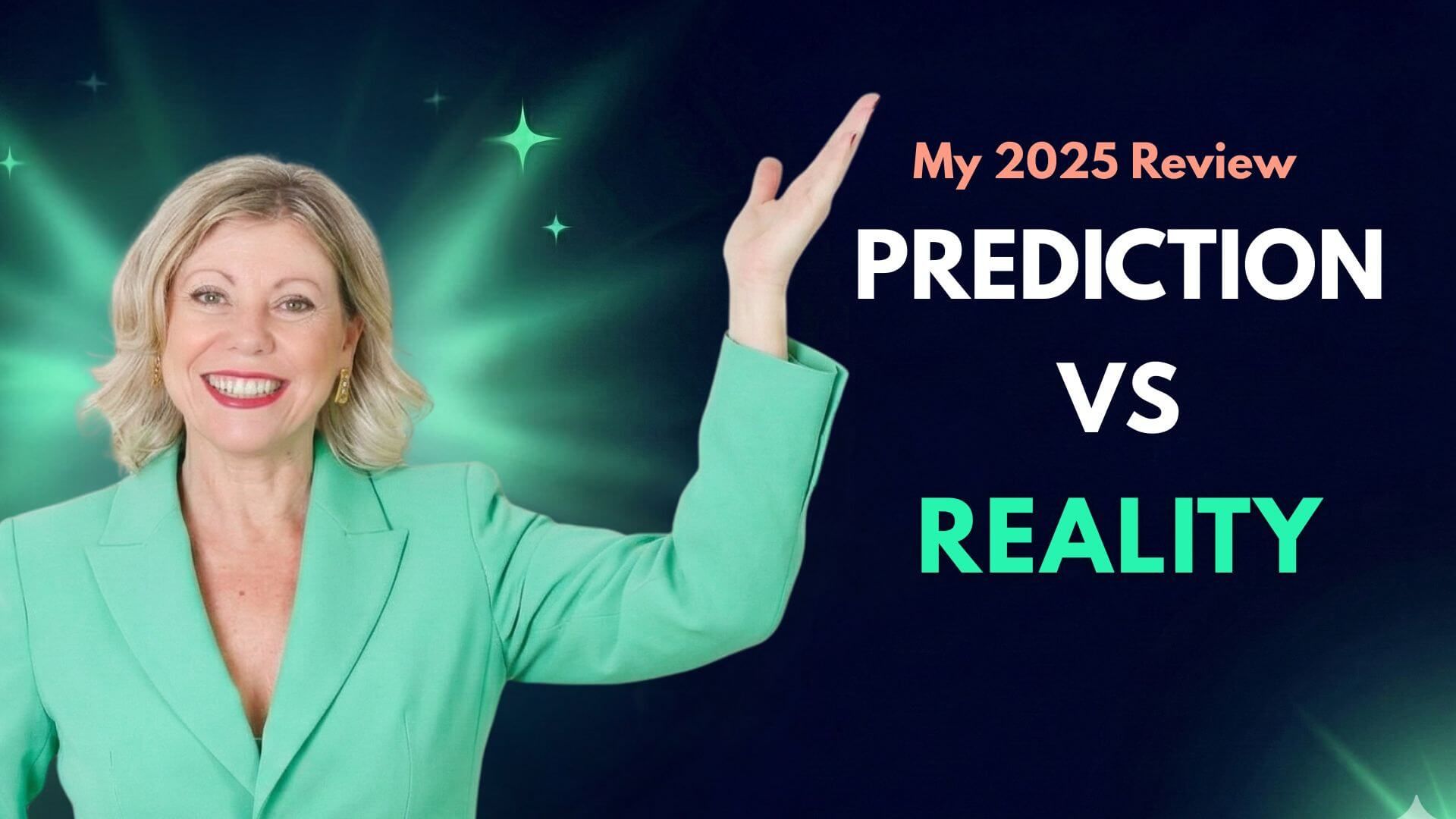
Originally published 9 January 2026. Reviewed and updated 7 August 2026.
At the start of 2026, I reviewed the marketing calls I had made for 2025. The original scorecard was confident, energetic and full of exact market statistics.
On review, several of those numbers did not have a source trail strong enough to keep publishing as fact. I have removed them.
The useful question is not whether I can declare every prediction a win. It is whether the underlying signal helped a business make a better decision.
The honest scorecard
| 2025 call | What held up | What I would say differently now |
|---|---|---|
| AI would move into everyday marketing work | AI became part of drafting, research, analysis, content and operational workflows for many teams. | “AI-first” is too broad. Begin with one useful, governed workflow, not a tool mandate. |
| Voice and conversational search would grow | People increasingly ask complete questions through chat and voice interfaces. | A business is not automatically invisible without a voice-search tactic. Publish clear answers for people and make important facts accessible. |
| Short-form video would remain important | Short video continued to support discovery and audience attention on major platforms. | No format is compulsory for every business. Use the channel and format your buyer uses and your team can sustain. |
| Human proof and user-generated content would matter | Reviews, customer language, community discussion and first-hand evidence remain valuable trust signals. | SEO is not dead, and Reddit is not a substitute for a complete authority strategy. Useful owned content and legitimate third-party corroboration work together. |
| Smaller specialist creators could outperform broad reach | Audience relevance and trust can matter more than a large follower count. | “Micro-influencer” is not a strategy by itself. Fit, disclosure, creative quality, buyer action and measurement still decide the value. |
| Immersive and wearable technology would influence marketing | Wearable and spatial interfaces continued developing. | The timing and customer relevance were overstated for most small businesses. Interesting technology is not automatically a priority investment. |
What I got right about AI
The important shift was not that every business needed more AI tools. It was that AI began moving from isolated content tasks into the systems around business work.
That includes:
- using structured business context instead of rebriefing every chat;
- turning repeatable processes into documented AI-assisted workflows;
- connecting approved sources and tools;
- giving systems limited, explicit authority;
- keeping people responsible for decisions and quality; and
- measuring the result before expanding access or automation.
The mistake in the phrase “AI-first” is that it puts the technology before the business outcome. My current approach is business-first, workflow-first and governed.
What I overstated about search
The original review treated conversational search, user-generated content and AI recommendation as one inevitable replacement for traditional search.
That was too absolute.
Google’s own guidance still prioritises helpful, reliable, people-first content. Google also says E-E-A-T is not one specific ranking factor. ChatGPT, Claude, Gemini and Perplexity use different retrieval systems, sources and product conditions.
Useful owned pages still matter. Third-party proof still matters. Crawl access, clear identity and consistent current facts still matter. None of those creates a guaranteed recommendation.
My August 2026 AI-shelf baseline made that visible. A business can appear for one strong association and remain absent across most buyer questions. One result is a signal, not dominance.
What I got wrong about trends
I gave too much weight to direction and not enough to timing, buyer relevance and implementation friction.
That is the classic trend trap. A technology can be real and advancing while still being a poor use of time or money for a particular small business.
Being early is not automatically better than being late. It is better only when the early move creates learning, customer value or an asset the business can use.
The seven-question trend test
- Buyer relevance: Is this changing how our actual customers discover, decide, buy or receive value?
- Business problem: What specific problem or opportunity would we address?
- Evidence: What do we know from current first-party data, customer conversations or reliable sources?
- Fit: Do we have the information, skills, systems and capacity to use it well?
- Risk: What privacy, safety, brand, financial or operational exposure would it create?
- Measurement: Which result would tell us to continue, change or stop?
- Reversibility: Can we run a limited test without locking the business into an expensive or high-risk decision?
If a trend cannot survive those questions, it does not deserve the roadmap yet.
What changed most in 2026
For my work, the biggest shift was from using AI to make more marketing material to implementing AI around the way a business actually operates.
That is why I created and developed the AI Brain for Business. Its Business DNA captures strategy, audience, offers, customer knowledge, goals and the Revenue Roadmap. Its Brand DNA captures positioning, messaging, voice and communication rules. The implementation layer then connects that knowledge to approved tools, workflows, permissions and human review.
For the client, the outcome is more relevant work, less repeated briefing and a clearer basis for deciding what AI should and should not do.
What I would prioritise now
- Choose one useful, low-risk business workflow.
- Clean the source information and name the human owner.
- Define the quality standard and approval boundary.
- Run real test cases and record errors, rework, time and business impact.
- Publish substantial buyer answers and legitimate proof instead of chasing content volume.
- Measure AI-search visibility with the same clean queries and conditions over time.
Sources and follow-up reading
- Google Search Central: Creating helpful, reliable, people-first content
- Australian Government: Voluntary AI Safety Standard
- OAIC: Privacy and commercially available AI products
- The 10 marketing shifts Australian business owners need to win in 2026
- How a stranger found me through AI search: what it proves
Your practical next step
Use the seven-question test on the trend currently taking the most space in your head. If it passes, turn it into one limited experiment with a named owner and measure.
For a complete implementation method, read my guide to AI implementation for Australian small business. If you want help selecting the right first workflow, book a 1:1 AI Business Power Hour. For deeper business context and repeatable systems, explore the AI Brain for Business.
About Deb Szabo
Deb Szabo brings 30 years in marketing to her work as an AI Business Strategist and Claude Specialist. She helps Australian founders and small teams turn business knowledge into governed AI context, practical workflows and useful day-to-day capability.
Deb passed Anthropic’s official proctored Claude Certified Associate - Foundations exam on 6 August 2026. She is registered in the Claude Partner Network and is based in Pokolbin in the Hunter Valley, NSW.
Get practical AI ideas for your business
Join Deb Szabo's weekly AI for Business Growth newsletter for practical ways to use Claude and AI across your business.
We hate SPAM. We will never sell your information, for any reason.