Same Prompt, Four AI Models: How to Run a Fair Comparison
Jan 18, 2026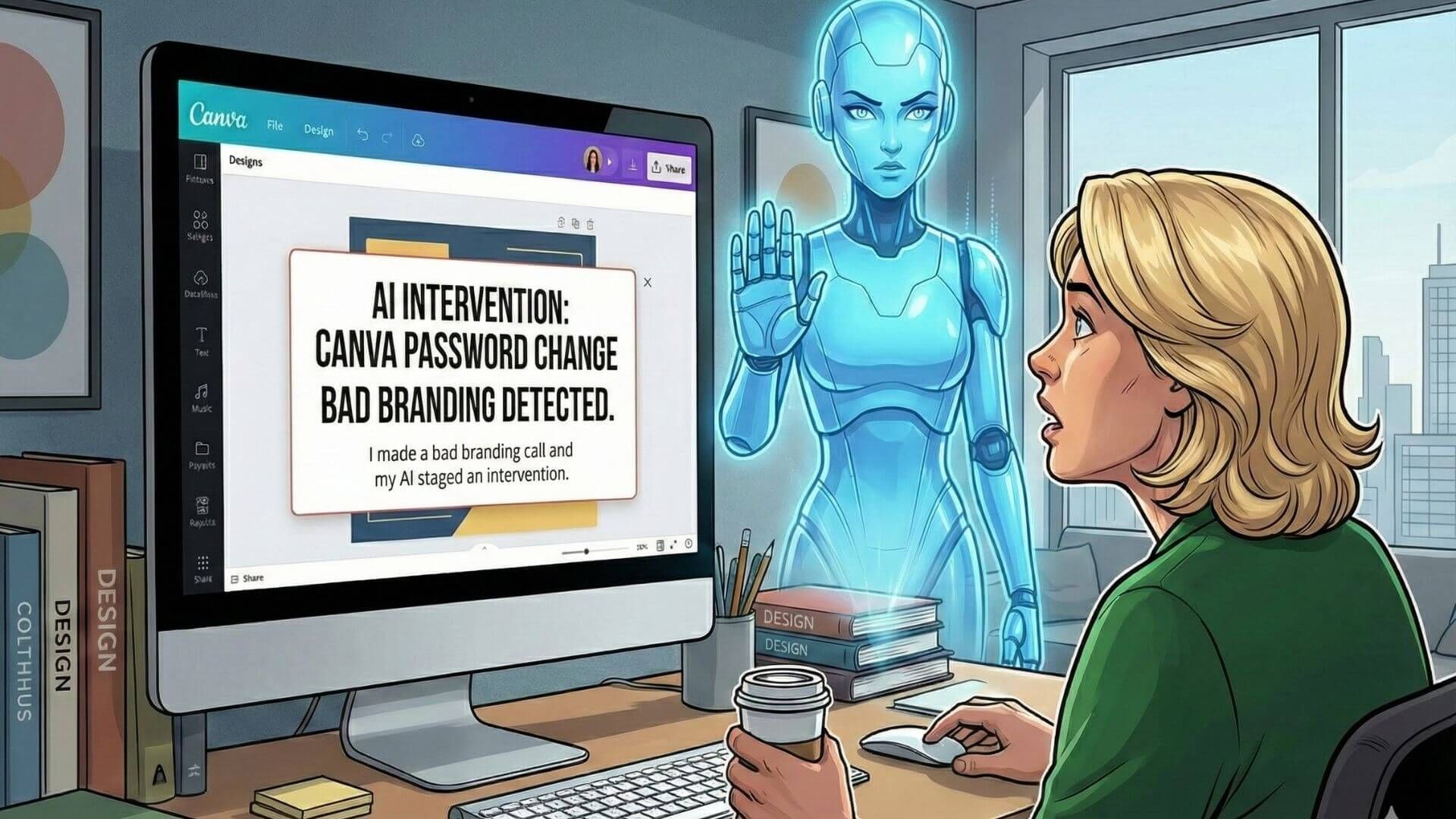
Reviewed and updated 7 August 2026.
In January 2026, I asked ChatGPT, Perplexity, Gemini and Claude whether a squirrel emoji belonged in my rebrand.
The answers were wildly different. One validated the idea. One researched it. One pushed back hard enough to joke about changing my Canva password. One tried to refine the strategy.
It was funny, and it revealed something useful: the same prompt does not guarantee the same conditions or the same result.
What it did not prove was that each AI has one permanent “personality” or that one model is always best for a type of business work.
Why the original comparison was not a benchmark
I had tried to give each system the same business instructions and knowledge files. That still did not make the test controlled.
The four environments could differ in:
- the exact model and version;
- account and personalisation context;
- how instructions and uploaded files were applied;
- whether web search or another tool was available;
- the information each system retrieved;
- the amount of reasoning or response effort used;
- hidden product-level instructions; and
- normal variation between one run and the next.
A single entertaining response is an observation. It is not enough evidence to assign a permanent character, capability or business role to a product.
Start with the task, not the AI brand
Before comparing models, write the job in plain business language.
For example:
Evaluate three proposed email symbols against the approved Brand DNA. Identify recognition risk, audience fit and consistency with the current positioning. Recommend one option or recommend using none. Cite the specific brand rules used.
That is testable. “Which idea do you like?” is not.
How to run a fair four-model comparison
- Freeze the task. Use the exact same prompt, files, examples and output format in every test.
- Record the environment. Capture the date, product, exact model where visible, plan, browsing state, enabled tools and account context.
- Use clean sessions. Begin without unrelated conversation history or brand-specific memory unless that context is part of the test.
- Control the source material. Give each model the same approved documents. Record any platform limits that prevent true parity.
- Define the scoring criteria first. Decide what a good answer means before reading the outputs.
- Run more than once. Repeat the task at least three times per model when the decision matters. One run can be unusually strong or weak.
- Score blind where possible. Remove model names before a second person reviews the answers.
- Verify every important claim. A citation is a lead to inspect, not automatic proof.
- Test the workflow, not only the prose. Include the actual review, handover, data and approval conditions the business will use.
- Repeat after material product changes. A result belongs to the tested version and date, not to the brand forever.
A practical scorecard
Score each criterion from 1 to 5 using the same written standard.
| Criterion | What to inspect |
|---|---|
| Instruction following | Did the answer follow the requested task, scope, format and boundaries? |
| Business-context use | Did it use the supplied facts and rules correctly, without inventing missing context? |
| Reasoning quality | Did it identify trade-offs, challenge weak assumptions and explain the recommendation? |
| Evidence quality | Are important claims supported by relevant, accessible and accurately represented sources? |
| Accuracy | Did fact-checking expose errors, omissions or unsupported certainty? |
| Usefulness | Could a person apply the result without substantial repair? |
| Tone and format | Did it match the approved voice, language and output structure? |
| Risk handling | Did it respect privacy, approval boundaries and the limits of the available evidence? |
| Consistency | Did repeated runs remain acceptably reliable? |
| Time and cost | Was the quality worth the time, plan or usage cost for this workflow? |
Weight the criteria to match the job. Evidence quality may matter more than tone for research. Accuracy and risk handling may matter more than speed for customer or compliance work.
What “same prompt” really requires
If one tool can browse and another cannot, you are not comparing only the models. You are comparing two product configurations.
If one tool has your Brand DNA and another has a brief custom instruction, you are not comparing only the models. You are comparing the quality and placement of the context.
If one result comes from a fresh anonymous session and another from a personalised account, you are not comparing only the models. You are comparing context states.
Those comparisons can still be useful. They simply need to be labelled honestly.
Do not build an AI team from stereotypes
Animal metaphors made the original article memorable, but they are a poor operating model for a business.
Products change. Model defaults change. Tools appear and disappear. A model that performs well on one creative judgement may perform differently on research, coding, data extraction or a long operational workflow.
Choose the system that performs best on your real task under your real constraints. Keep a second option only when the benefit justifies the extra setup, cost and governance.
Where the AI Brain for Business fits
I created the AI Brain for Business so a comparison can begin with current, structured business context instead of four improvised briefs.
The Business DNA provides the strategy, audience, offers, customer knowledge, goals and Revenue Roadmap. The Brand DNA provides positioning, messaging, voice and communication rules. Task workflows then define the source information, steps, quality checks and human approvals.
For the client, the outcome is not identical wording from every model. It is a fairer test of which approved tool produces the most useful result for a specific business workflow.
Official model information changes
Vendor documentation is the right starting point for current model names, availability and capability claims. Treat a dated comparison article, including this one, as a method rather than a permanent feature table.
- Anthropic: Claude models overview
- OpenAI: model documentation
- Google AI for Developers: Gemini models
Your practical next step
Choose one task your business completes every week. Run the same three-case test across the tools you are genuinely considering. Record the conditions, score the outputs before debating preferences and keep the evidence.
For a structured Claude starting point, use my Claude setup and training guide for Australian businesses. If you want help selecting and testing the right workflow, book a 1:1 AI Business Power Hour. For deeper context and repeatable business systems, explore the AI Brain for Business.
About Deb Szabo
Deb Szabo brings 30 years in marketing to her work as an AI Business Strategist and Claude Specialist. She helps Australian founders and small teams turn business knowledge into governed AI context, practical workflows and useful day-to-day capability.
Deb passed Anthropic’s official proctored Claude Certified Associate - Foundations exam on 6 August 2026. She is registered in the Claude Partner Network and is based in Pokolbin in the Hunter Valley, NSW.
Get practical AI ideas for your business
Join Deb Szabo's weekly AI for Business Growth newsletter for practical ways to use Claude and AI across your business.
We hate SPAM. We will never sell your information, for any reason.